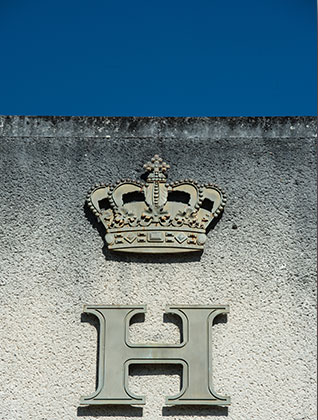
Henrik, Prince Consort of Denmark, is of French origin
and was born Henri de Laborde de Monpezat.
He was the eldest son of his family. In 1967, he
became Prince Henrik by virtue of his marriage
with Princess Margrethe of Denmark.
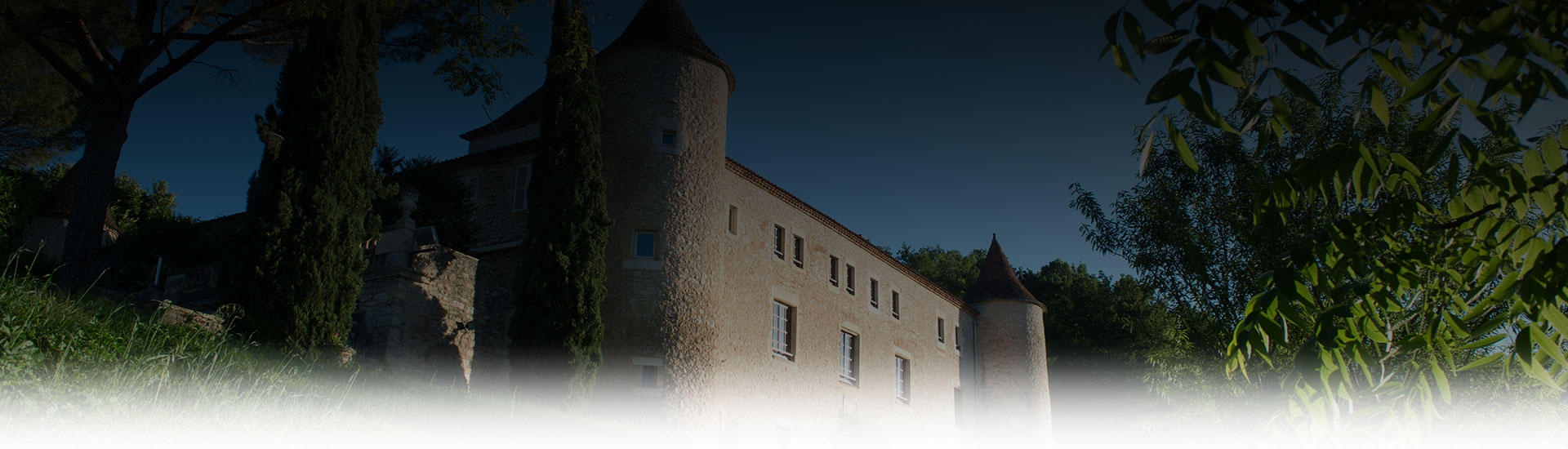
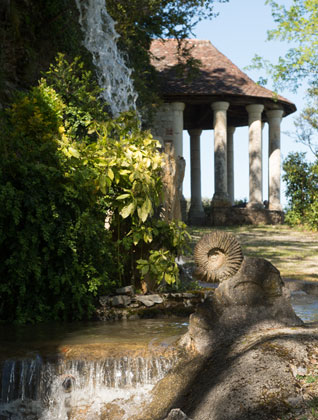
In 1974, he bought the Château
de Cayx and the lands surrounding it – a property
situated not far from his own family estate in Cayrou.
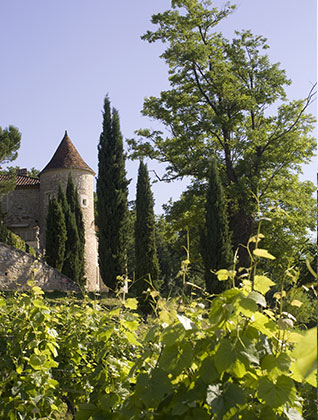
He patiently set himself to the renovation of the château
and to the reconstitution of its prestigious vineyard.
The Danish sovereigns enjoy their annual stays at the
Château de Cayx. Their children, the Crown Prince
Frederick and Prince Joachim, also like spending their
summer vacations at the château with their respective
families.

All
the members of the Royal family show a keen interest
in viticulture and in the preservation of their
heritage. The future of the Château de Cayx
now lies in the hands of the upcoming generation,
and especially in those of the Crown Prince Frederick.
From poetry to gastronomy
Wine is but one of the passions of Prince Henrik. HRH
devotes much of his time to the defence of the European patrimony (he was
the President of Europa Nostra from 1999 to 2007);
he also presides over the Danish Red Cross and the World Wild Life Fund dedicated
to the protection of the environment.
He is the author of several books, including collections of poems, some of
which have been awarded academic prizes in Paris, Strasbourg and Toulouse.
Prince Henrik also likes to perpetuate poetical traditions in relation with
the Château de Cayx. Hereunder a quatrain that he wrote to celebrate
his beloved domain:
Cahors
de Cœur
Des vins seigneurs
Du Lot la fleur
De Cayx l’honneur.
The Wine of Cahors: a family affair
A gourmet and a staunch defender of culinary traditions,
Prince Henrik has accommodated some ancient recipes
and invented new ones to accompany the wines he
produces at Cayx. Some of his favourites that are
often served at the royal table include local products
such as cepes, black truffles, duck foie gras or
the famous Quercy lamb.
Several Monpezat families have lived in France over
the centuries, but the two most important were
the Monpezat from Agen and those from the Quercy.
Their baronies were by far the most important
of the region between the 10th and the 15th Centuries.
The Wine of Cahors: a family
affair
Originating from Navarre, the Laborde family settled
a marriage agreement in 1648 with the Monpezat whereby
Jean de Laborde married Catherine d’Arricau, dame
of Monpezat and heir apparent of the fief. In May 1655,
the couple received the letters of nobility signed by
King Louis XIV entitling them to use the double name
Laborde de Monpezat.
Born to this family settled in the Béarn,
Aristide de Laborde de Monpezat, great-grandfather
of Prince Henrik of Denmark, later became mayor of
the town of Pau from 1876 to 1881.
In 1897, the name of Monpezat was given to a street in Pau that ran at right angles
to rue Bernadotte. That was indeed a strange coincidence – or
a sign of destiny as Prince Henrik puts it in his
book Destin oblige (published in 1996): Queen Margrethe
II of Denmark is a descendant of Marshal Bernadotte
by her mother Queen Ingrid, born princess of Sweden.
During the last decade of the 19th Century, Henri de Laborde
de Monpezat, grandfather of Prince Henrik, emigrated to the
then French Indo-China to seek his fortune. A wise entrepreneur
and a gifted administrator, he quickly established himself
at the head of a flourishing agricultural and industrial empire,
with offices in Tonkin and Amman.
In 1902,
Henri de Monpezat became involved in politics and
was elected deputy at the Conseil supérieur
des colonies. An unflagging pioneer, he founded in
1920 La Volonté Chinoise that quickly became
an important daily newspaper in Hanoi.
He also set up an agricultural domain of rice and coffee plantations
extending over 15 000 ha, operated several cotton spinning
factories and opened a number of coalmines.
In 1928, his second son, Prince Henrik’s father, joined
him to help with the management of the family business.
Following the death of
his father, André took over the direction
of the family enterprises with the help of his brother.
He was especially involved in the management of the
newspaper, that he later renamed L’Entente.
André de Monpezat’s eldest children,
Prince Henrik and his sister Françoise,
lived the first years of their lives in the pomp
and splendour of the then French Indo-China. Prince
Henrik graduated from the French Upper Secondary
School in Hanoi.
He shared his father’s
passion for hunting and horse riding, and he also
took a keen interest in running the plantations,
setting up irrigation devices and implementing
the new methods of exploitation devised by his
father.
From his life in Indo-China, Prince Henrik has
retained a profound interest for the Vietnamese
and Chinese cultures and philosophies.
In 1955, after
the disastrous Diên Biên Phû episode,
the Monpezat family quit Indo-China for good
and returned to their native Quercy to settle
in Albas, at the very heart of the Cahors wine-producing
district. André de Monpezat then started
his own vineyard and passed on to his children
his taste and passion for wine and winemaking.
In
1946, together with other fellow wine producers, he
founded the Cave coopérative of Parnac, devoted
to promoting the wines and the vineyard of Cahors.
To this day, the Cooperative offers for sale a special
cuvée named after the « Comte André de
Monpezat ».